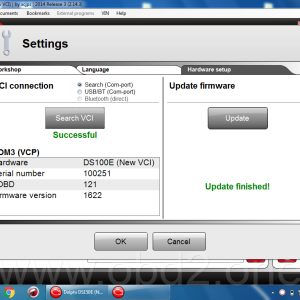
 Autocom, Delphi and WOW modified and original firmware 1622
£1.99
In case of download problems please contact support. Dismiss
Mastering brass band arranging is a journey that blends theory with practical listening. The path is clear: ground yourself in the fundamentals using a guide like Andrew Duncan's book, memorize the score layout, get comfortable with a notation program, and listen to the masters.
While Duncan's book is the modern standard, several classic and alternative texts are often recommended by the community:
Scoring and arranging music for brass bands requires a deep understanding of the instruments, their capabilities, and the overall sound of the ensemble. By considering the instrumentation, scoring considerations, arranging techniques, and best practices outlined in this paper, arrangers and composers can create music that showcases the unique qualities of the brass band.
The art of scoring and arranging for the British-style brass band is a unique craft, distinct from orchestral or concert band writing. The standard brass band consists of 25 players (plus percussion) and features a highly standardized instrumentation: soprano cornet in E♭, nine cornets in B♭ (split into solo, second, and third), flugelhorn in B♭, three tenor horns in E♭ (solo, first, second), two baritones in B♭, two tenor trombones (B♭, often with triggers), one bass trombone (in G or F), two euphoniums in B♭, and four tubas (two E♭ and two B♭), plus two or three percussionists. Effective scoring for this ensemble demands a deep understanding of timbre, tessitura, balance, and idiomatic writing. scoring and arranging for brass band pdf
The British-style brass band follows a rigid structure of roughly 25 brass players plus percussion: Soprano, 4 Solo , 1 Repiano , 2 Second , and 2 Third Flugelhorn:
A standard brass band consists of approximately 25–28 players, with nearly all instruments pitched in or Eb .
The modern British-style brass band is a unique sonic entity. Unlike the symphony orchestra, which relies on the contrast between string, woodwind, and brass colors, the brass band is a homogenous family. Every instrument produces sound via a cup mouthpiece and conical bore (with the exception of the trombones). This results in a seamless blend where one instrument flows into the next, creating a "wall of sound" that can be both majestic and deeply lyrical. Mastering brass band arranging is a journey that
: Two Bb Baritones and two Bb Euphoniums provide rich, cello-like textures.
This book is highly praised for its readability and practical approach, moving from simple hymn tune arrangements to complex orchestral transcriptions. :
When exporting your final project to PDF for printing or distribution, ensure the following settings are met in your notation software (Sibelius, Dorico, or MuseScore): Effective scoring for this ensemble demands a deep
Each instrument has its own unique characteristics, range, and timbre, which must be taken into account when scoring and arranging music.
Example layout for a chorus:
Don't have an account yet? Sign up
No items in your cart. Go on, fill it up with something you love!
Start Shopping NowAutocom, Delphi and WOW modified and original firmware 1622Autocom, Delphi and WOW modified and original firmware 1622