 DataSheet
Award Winning Solutions
Xena has won multiple global awards for price/performance and technical innovation. Learn more.

Technical Expertise
Copyright © 2009-2026 Teledyne LeCroy Xena ApS, Denmark
The search string "192.168 1.100 1" usually refers to networking configurations where 192.168.1.100 is a specific device's IP address and the trailing often represents a sub-parameter, such as a display number priority level
: In a standard home network setup using a 24-bit subnet mask ( 255.255.255.0 or /24 ), the first three segments specify the exact subnet address space. All physical equipment must share these same three octets to communicate with one another locally without routing intervention.
If a specific device on your network (like a smart home hub) is configured with this IP, you can interact with it directly.
If you cannot connect to 192.168.1.100 , ping it: 192.168 1.100 1
Introduction 192.168 1.100 1 is ambiguous as written. It resembles parts of common networking notations (private IPv4 addresses, subnetting, gateway/DHCP entries, command-line arguments, or typos). Below I analyze plausible interpretations, explain technical context, show how such values appear in practice, provide step‑by‑step troubleshooting and configuration examples, and offer security and diagnostic guidance.
The IP address (often mistyped as 192.168 1.100 1 ) is one of the most common default private network addresses in the world. It is frequently used as the starting point for router DHCP pools or assigned to specific high-traffic local devices like Linksys routers, access points, smart TVs, and network printers.
Launch any standard web browser (such as Chrome, Edge, or Safari). The search string "192
Ensure your computer is also on the 192.168.1.x range. If your computer is 192.168.0.5 , it won't be able to "see" the .1 range without extra configuration.
In his configuration, that trailing 1 was a flag—a "Primary Administrative Override." It meant the server believed an administrator was already logged in with full write-permissions.
192.168.1.100 is a small but fundamental piece of the modern internet's infrastructure. For the average user, it's a tool—an address that unlocks the control panel for your home network. For network technicians, it's a familiar standard within the vast 192.168.x.x private space. Whether you're a beginner looking to change your Wi-Fi password or a seasoned user setting up a static route, understanding this versatile IP address empowers you to take control of your network. If you cannot connect to 192
Enter the username and password for that specific device (not your router password).
. This address is a common private IP often used as the default for certain routers or assigned to the first device on a network.
Replace any missing or spaced gaps with a single period ( . ).
This IP address can serve two primary roles on your network:
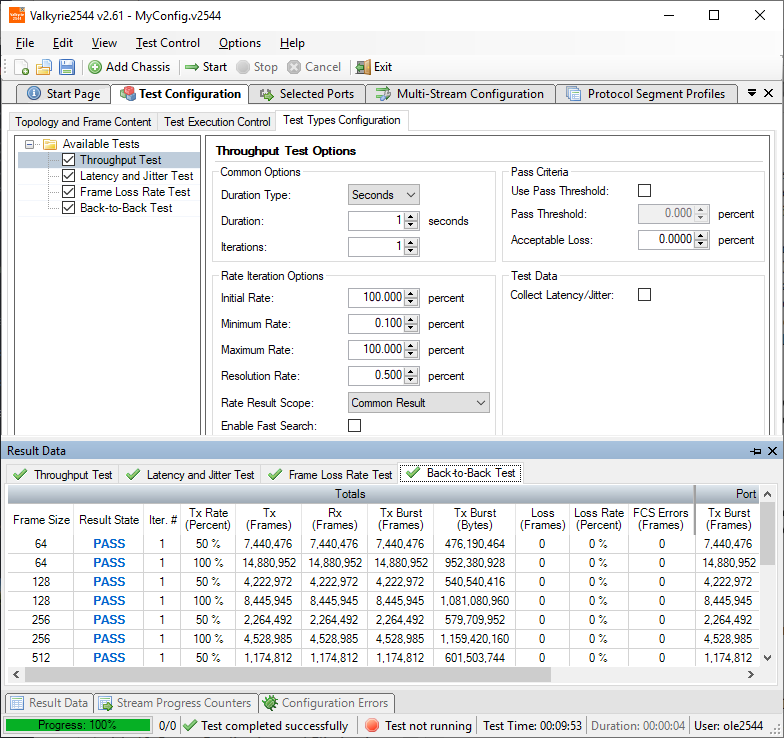
– Throughput
– Latency (FIFO, and LILO) for store-and-forward and cut-through DUTs
– Frame loss
– Back-to-back frames
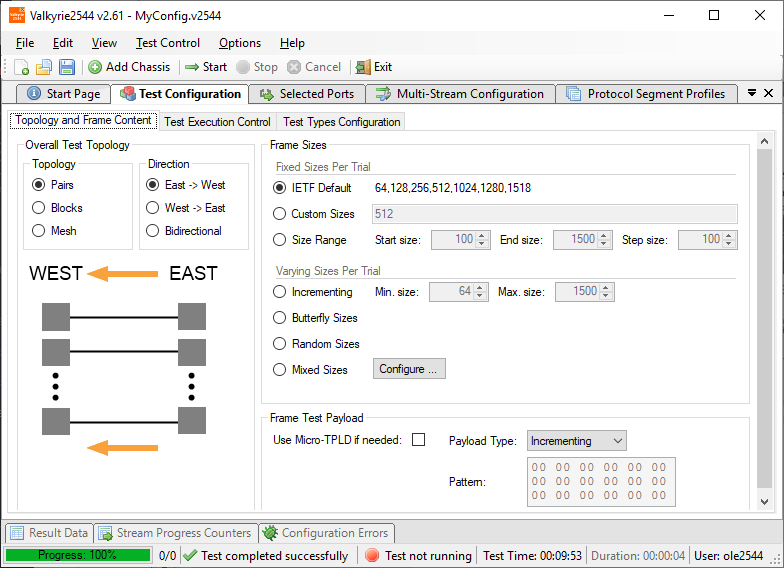
– Ethernet,VLAN, Q-in-Q, MPLS, IPv4 and IPv6 frame support
– Automatic learning packets
– Custom field setting for any protocol
– Forwarding, including throughput and forwarding rates with a 16ns resolution
– Configurable maximum test rates
– L2 learning
– Repeat count
– Frame sizes same as stream
– Per test, per trial and per frame size learning
– Up to 5 chassis, 72 ports
– Full mesh, one-to-one, one-to-many, many-to-many
– Multi-port pair definitions, East/West
– Uni-directional or bi-directional testing
– Testing between any combination of port-speeds
Reports are available in PDF and .xml format.
All Xena testers and all port speeds.
Test configuration files can be executed via CLI. Linux also supported via Mono framework.
Xena has won multiple global awards for price/performance and technical innovation. Learn more.
Copyright © 2009-2026 Teledyne LeCroy Xena ApS, Denmark